Raisin in the Sun: Act 4
Background Research |
Search TermsThese vocabulary words discussed in class can help you build good search terms for your background research.
|
PROTIP:
Use quotation marks to search for specific words together in a specific order. "Civil Rights"
"Systemic Racism" |
Library Databases & Online Resources |
|
This resource is devoted to making the U.S. Supreme Court accessible to everyone. Find searchable audio of court proceedings, easy to understand case summaries and decision information, and full-text Supreme Court opinions. Oyez also provides detailed information on every Justice throughout the Court’s history and offers a panoramic tour of the Supreme Court building.
|
|
|
|
Prepare the Soil
Background investigation and thoughtful questions lay a healthy groundwork for your research.
|
Plant the Seeds
The librarians and databases can help you locate quality sources that will sprout into your research project.
|
Harvest your Crop
Use NoodleTools and Google Drive to organize, compile, and annotate the sources and information you have gathered.
|
|
Terms
The actual words you are looking for. PROTIP:
Use quotation marks to search for specific words together in a specific order "Declaration of Independence"
"Civil Rights"
"Chicago Fire" |
|
|
AND
Results with search terms combined.
Lincoln AND "civil rights"
poverty AND crime |
OR
Results with any of the search terms.
"right to vote" OR suffrage
wage OR income (Great for synonyms and ideas with many different names.) |
NOT
Results with search terms excluded.
"Chicago Fire" NOT soccer
dementia NOT Alzheimer's (Great for targeting a term that has many different meanings.) |
|
Subject
What topics the resource covers Hone in on all of the resources related to a topic. Databases often have specific, controlled vocabulary for topics. "Canines" instead of "dogs"; "hypertension" instead of "high blood pressure." Search multiple subject terms at once using Boolean Operators to get even more specific. You can find a database's specific subject terms linked in a resource's information page, or in a database's Thesaurus Terms. Use those terms to search in the Subject field on future searches. Peer Reviewed — Limits to items from scholarly journals that have gone through a review process by experts in the field. Publication Date
When the resource was created Limit the results to recent years for the most up-to-date information and research. Older results can help find primary sources or show how people in certain time periods understood your topic. |
Source/Content Type
Where the resource was originally published Reference Books of facts with specific entries to cover particular information, like encyclopedias, atlases, dictionaries, etc. (Ex. Dictionary of American History, Encyclopedia of Crime and Justice) Newspaper/Magazine/Periodical Often shorter articles, for the public and a general audience. Great for overviews, recent news, and opinions about a topic. (Ex. Rolling Stone, Chicago Tribune) Academic/Scholarly/Trade Journal More technical articles for a more specialized audience. Often longer articles that include actual studies and research conducted on a particular topic. (Ex. Journal of Education, American Historical Review) Full Text
If the entire resource can be viewed and accessed on the database Some databases just include information and a citation for the resource, but not the actual resource itself. Limiting by "Full Text" excludes those from your search results. If you see a citation for a resource that you would like to find, talk to the librarians. We can often get that resource for you in just a few days! |
|
Search multiple databases. Each database has a different collection of resources. Performing the same search will get you even more resources to choose from. Use the citations and bibliographies of the most useful resources. Search for those authors, or even those exact resources. Find the information those writers used.
|
Abstracts are short summaries of there resource. Read the abstract and subject terms to decide if you want to save the resource and explore it further. This will save you a lot of time! |
|
|
|
|
|
|
NoodleTools provides integrated tools for citations, document archiving, annotation, and collaborative research and writing. Most library databases will create properly formatted citations and export it right to your NoodleTools project folder.
|

|
Google Docs has a built-in Citation Tool to help you format citations, create a bibliography/works cited page, add footnotes, and more. Watch a tutorial here.
|

|
The Online Writing Lab (O.W.L) at Purdue University is an extensive resource for creating works cited and annotated bibliographies, as well as help with research, writing, and formatting styles.
|

|
|
|
|
Timing
Was the source produced at the time of the event/period being studied? Shortly after? Or much later? Sources created closer to the event are more likely to be primary. Primary Source: A photograph of settlers preparing for their journey on the Oregon Trail in 1847 Secondary Source: A 2018 documentary film about the Oregon Trail using photographs, diaries, and other source material |
Authorship
Was the source created by someone directly involved or witnessing the event? First-hand accounts and records usually indicate a primary source. Primary Source: A memoir written by a woman who grew up during the Great Depression Secondary Source: A biography by a historian published in 2004 about Frances Perkins, the U.S. Secretary of Labor during the Great Depression |
|
Purpose
Is the source's original purpose to convey direct information, or to analyze or interpret the information? Raw documentation and data tends to be primary sources Primary Source: Statistical data on 1980s voter turnout collected by the U.S. Census Bureau Secondary Source: An article in an academic journal analyzing voter trends over time that uses census data |
Context of Use
The context in which a researcher uses and analyzes a source can also determine if it is primary or secondary. If the source directly provides the key information or evidence being examined, it is likely a primary source. Source: Review of the movie Jurassic Park by movie critic Roger Ebert. Primary Source: For a biography about Ebert, or a study of film criticism through history. Secondary Source: for research on the evolution of special effects in movies, or a biography of the director. |
|
Databases & Websites
Several databases and websites are dedicated to providing original documents, raw research data, and other primary sources. You can find a large collection of them on our Primary Sources database page. |
Archives
Archives are collections of historical artifacts like documents, records, manuscripts, or photographs surrounding a specific place, institution, individual, or group of people. They are usually hosted by museums, historical societies, libraries, businesses, universities, and other institutions. Many archives require appointments and other requirements to view their materials, but there are often partial or complete digital archives as well. |
|
Oral Histories
Oral histories are collections of interviews - either audio recording or transcribed - with people who have first-hand experience with a historical event or topic. Oral histories are often collected in books or as digital archives. |
Create Them Yourself
Conduct interviews or surveys, collect your own raw data, or take your own photos! If they help to answer your research question, they are primary sources. |
|
How do you know if news and other online information is credible? Use the four moves of the S.I.F.T. method to help you analyze news, videos, and other information that you encounter online and on social media. The SIFT method is a strategy developed by digital literacy expert, Mike Caulfield. All SIFT information on this page is adapted from his materials with a CC BY 4.0 license.
When in doubt, contact an expert - like a librarian!
|
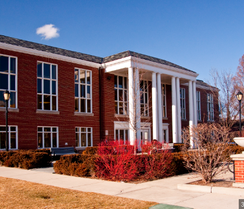
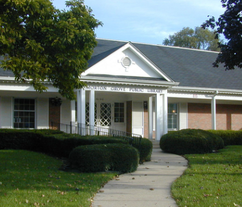
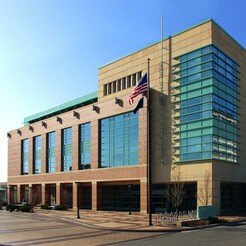
Public Libraries |
|
NIles-maine public library
park ridge public library
morton grove public library
des plaines public library
glenview public library
|
|
|
Librarians
|
Library Hours Monday - Friday 7:00 a.m. — 4:30 p.m. |